
Campaigning at educational institutions is quite worrying and can lead to bias in politicization. The General Elections Commission (Komisi Pemilihan Umum or KPU) should develop campaign methods in response to the Constitutional Court's decision to ensure that election campaigns remain in accordance with the regulations. One of these measures is that campaign permits at educational institutions should also include permission from the KPU.
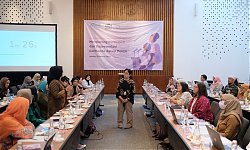
"If the request for permits is granted at the request of each election participant, that would be very problematic, it could turn into a free market," said academic Titi Anggraini from the Faculty of Law, University of Indonesia, in her interview hosted by Muhammadiyah in Jakarta on September 6th.
In the upcoming 2024 Elections, there are 18 national political parties and 4 local political parties in Aceh. Therefore, Titi suggests that campaign permits should only be granted by the KPU, as otherwise, it would be highly susceptible to politicization.
“The debate method is also progressively modified, enabling substantive dialectics and avoiding mass mobilization," she stated.
Furthermore, Titi added that there is a need for an adjustment in campaign methods at educational institutions. For example, by refraining from displaying campaign attributes and distributing campaign materials such as campaign props and advertisements. According to Titi, when we trace the history of campaigning at educational institutions, it aims for substantive debates, the clash of ideas, and addressing the dialectics of issues in a more concrete way that involves the academic community on campus.
"Thus, the KPU should regulate the operational follow-up, involving stakeholders in the field of education, starting from the Ministry of Education, associations of higher education institutions, and so on," she concluded. []
Translated by Catherine Natalia